PRESENTATION

The Route of the Last Incas
8 Days / 7 Nights

Summary Short Description: Peru’s most historic expedition. Begins at Choquequirao, the sister citadel of Machu Picchu, and ends in Vilcabamba, where the Inca empire resisted 36 years after the conquest. You walk the same trails used by Manco Inca fleeing the Spanish. You visit Vitcos-Rosaspata, the White Rock of Ñustahispana, and Espíritu Pampa. Fewer than 500 people per year complete this route.

choque002
choque003

Technical Data


Duration

8 days / 7 nights

Distance

Approximately 85 km

Minimum altitude

1,000 m (Espíritu Pampa)

Maximum altitude

4,650 m (San Juan Pass)

Difficulty

High

Starting point

Cachora (2,900 m)

Ending point

Cusco (via Quillabamba)

Group size

2 to 6 people

Departures

On demand (minimum 2 people)

land02 scaled

Full Description

This is not a tourist route. It is a journey through Peru’s most dramatic history.

After the fall of Cusco in 1533, Manco Inca organized the resistance against the Spanish. When the situation became untenable, he retreated into the mountains of Vilcabamba, establishing an independent Inca state that survived until 1572. For 36 years, the last Incas governed from the jungle, protected by the Apurímac canyon and the snow-capped peaks of the mountain range.

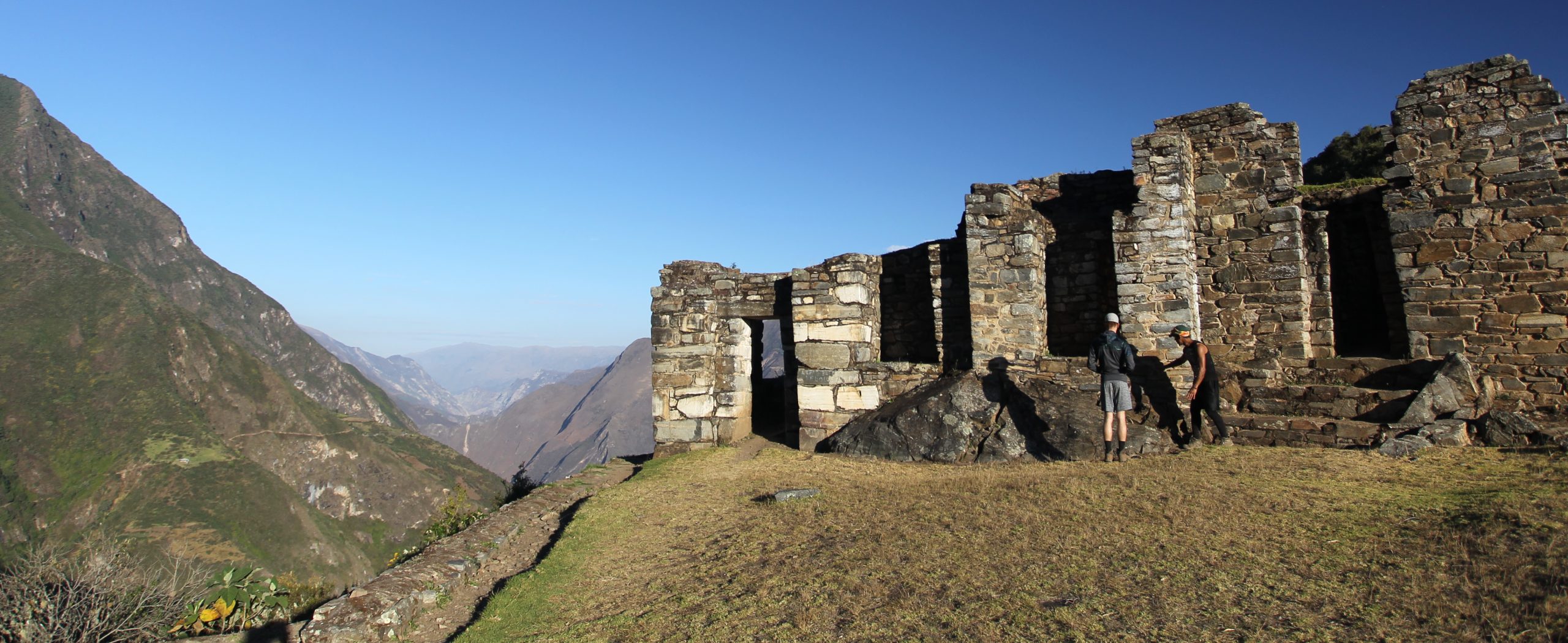
This expedition follows that historic route in reverse. You begin at Choquequirao, the Cradle of Gold, which served as a forward post and ceremonial center.

You cross the San Juan Pass at 4,650 meters — the same pass used by Inca chasquis to communicate between cities. You descend toward Vilcabamba, visiting Vitcos-Rosaspata (Manco Inca’s palace), the White Rock of Ñustahispana (one of the most sacred ceremonial sites), and Espíritu Pampa (the true lost city, capital of the Neo-Inca state).

This is a trek for those who seek something more than landscapes. It is for those who want to walk where an empire ended.


Itinerary

Day 1

Cusco → Cachora → Chiquisca

Distance: 12 km
Elevation change: -1,500 m
Walking time: 6–7 hours

Departure from Cusco at 5:00 in the morning. 4-hour private vehicle transfer to Cachora, passing through Limatambo and the Apurímac valley. Breakfast in Cachora with views of the Padreyoc snow-capped peak.

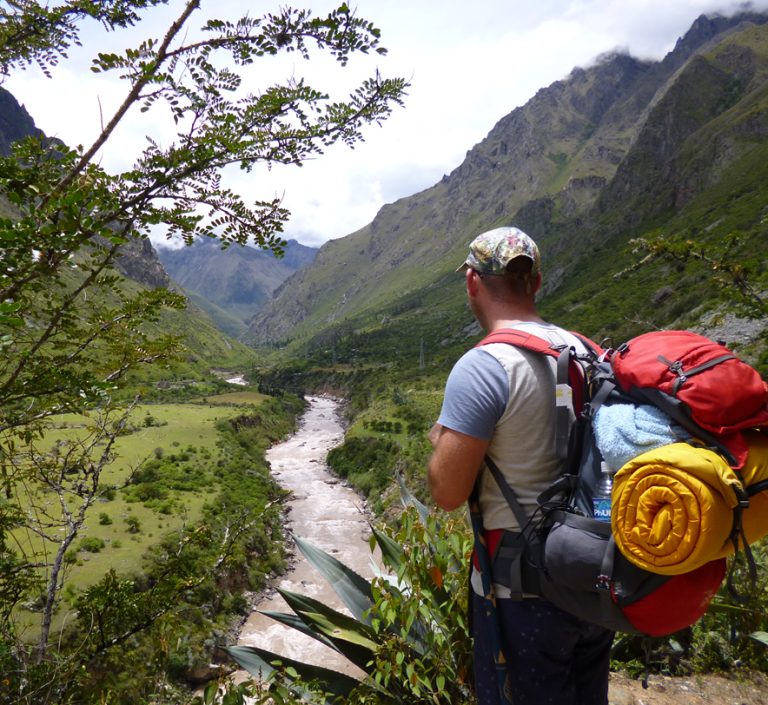
Registration at Capuliyoc and start of the trek. The trail descends into the Apurímac canyon, the second deepest in the world. Panoramic views open up as you descend. Lunch at Cocamasana. In the afternoon, the descent continues through vegetation that transitions from highland puna to dry forest.

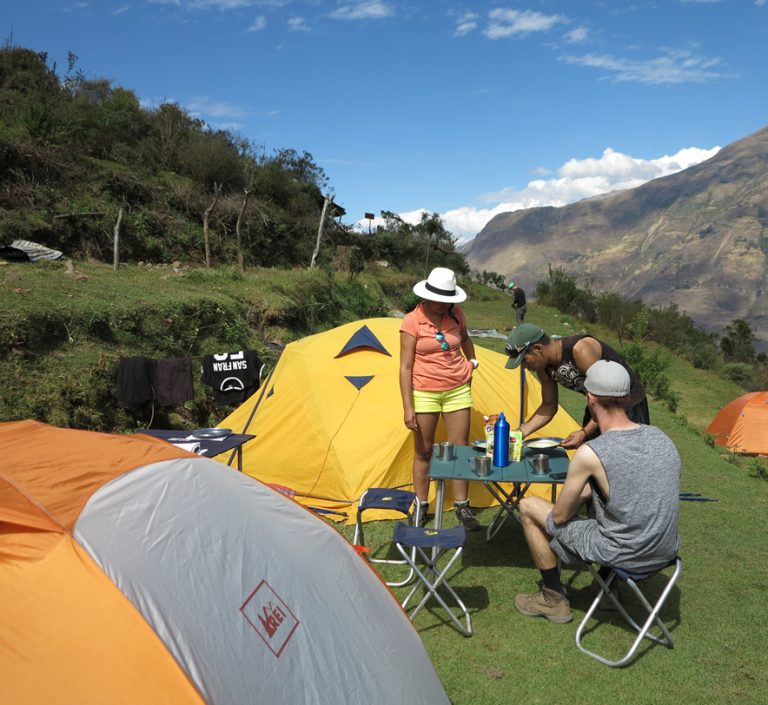
Arrival at Chiquisca (1,900 m) in the late afternoon. Camp setup. Dinner and overnight in tents.

Accommodation: Camping in Chiquisca | Meals: Breakfast, Lunch, Dinner

Day 2

Chiquisca → Choquequirao

Distance: 8 km
Elevation change: +1,500 m
Walking time: 6–7 hours

Early breakfast. 45-minute descent to Playa Rosalina (1,550 m). Crossing of the Apurímac River over a suspension bridge.

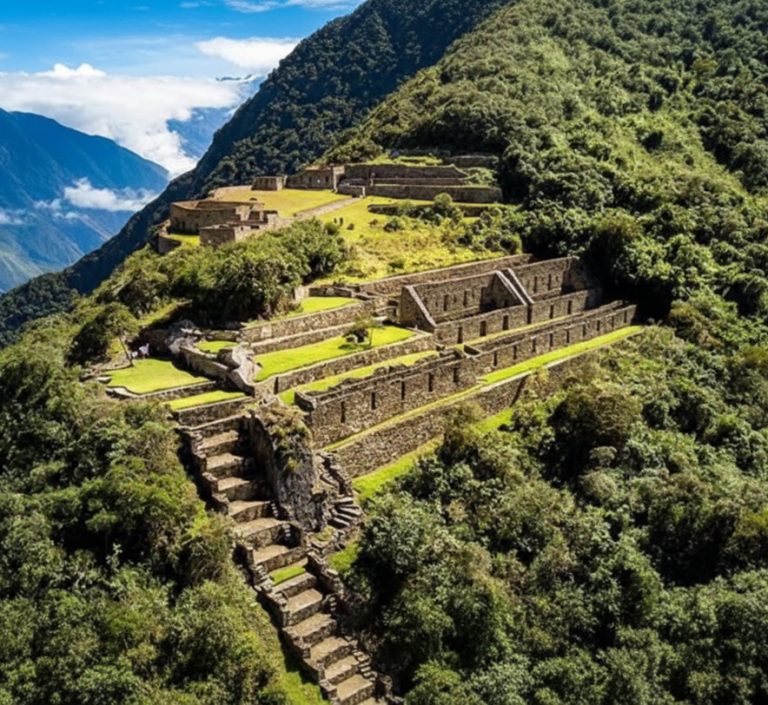
The ascent begins. The first 3 hours are the most demanding, with a constant gradient up to Santa Rosa. Brief rest at Marampata (2,850 m) with the first view of Choquequirao. Final hour of walking through orchids and bromeliads. Arrival at Choquequirao (3,050 m) at midday. Lunch with views of the ruins. In the afternoon, guided exploration of the main sector: the Haucaypata plaza, the main temple, and the terrace system. Sunset on the terraces.

Dinner and overnight at the campsite within the complex.

Accommodation: Camping in Choquequirao | Meals: Breakfast, Lunch, Dinner

Day 3

Choquequirao Exploration → Pinchauniyoc

Distance: 10 km
Elevation change: +400 m / -600 m
Time: 6 hours

Optional sunrise at Choquequirao. Breakfast at the campsite.

Morning dedicated to exploring the more remote sectors: the llama sector with its 24 terraces decorated with white stone carvings, the priests’ quarter, and the viewpoints over the canyon. These decorated terraces do not exist at any other Inca site in the world. Lunch at the site. In the afternoon, the walk begins heading north. The trail climbs toward Pinchauniyoc, an extension of Choquequirao with partially excavated structures.

Arrival at the campsite in the late afternoon. Dinner and overnight in tents.

Accommodation: Camping in Pinchauniyoc | Meals: Breakfast, Lunch, Dinner

Day 4

Pinchauniyoc → San Juan Pass → Yanama

Distance: 16 km
Elevation change: +1,600 m / -950 m
Time: 8–9 hours

The most demanding day of the trek. Breakfast before dawn and departure at 5:30.

Constant ascent from Pinchauniyoc (2,850 m) to the San Juan Pass (4,650 m). Five hours of climbing through terrain that shifts from cloud forest to high-altitude grassland.

At the pass, the most spectacular panorama of the trek: the Choquetacarpo glacier gleaming ahead, snow-capped peaks in every direction. Possibility of spotting Andean condors.

Lunch at the pass or start of the descent. In the afternoon, 3–4 hour descent to Yanama (3,700 m).

Approximate arrival at 4:30. Camp setup. Dinner and overnight in tents.

Accommodation: Camping in Yanama | Meals: Breakfast, Lunch, Dinner

choosin

Day 5

Yanama → Huancacalle

Distance: 12 km
Elevation change: -700 m
Time: 5–6 hours

Breakfast and departure at 7:00. The trail descends gradually into the Vilcabamba valley. The landscape changes: you leave the high-altitude zone and enter a more temperate climate.

The path passes through Quechua communities that maintain ancestral traditions. Fields of potato, corn, and quinoa line the trail.

Lunch along the way. In the afternoon, arrival at Huancacalle (3,000 m), the base village for exploring the Vilcabamba sites.

Check-in at local accommodation. Rest of the afternoon free to rest.

Dinner and overnight at a basic guesthouse.

Accommodation: Guesthouse in Huancacalle | Meals: Breakfast, Lunch, Dinner

choosin

Day 6

Vitcos – Rosaspata and the White Rock

Distance: 8 km
Elevation change: +400 m / -400 m
Time: 5–6 hours

Breakfast in Huancacalle. This day is dedicated to the most important sites of Vilcabamba.

A 1.5-hour walk to Vitcos, also known as Rosaspata. This was the palace from which Manco Inca governed the resistance between 1537 and 1544. The ruins include the royal palace, ceremonial plazas, an ushnu with views over the valley, and residential structures for the Inca elite. The guide explains the history of the resistance: how Manco Inca organized his troops, the battles against the Spanish, and the final years of the empire. Continuation to Ñustahispana, the White Rock. It is an enormous white granite rock approximately 8 meters tall, carved with staircases, seats, and ceremonial channels. A sacred spring flows from the rock. This was one of the most important ceremonial centers of the Neo-Inca state, a place of power where priests performed rituals and offerings. Picnic lunch beside the White Rock. Time to absorb the energy of the place. 

Walk back to Huancacalle. Dinner and overnight at the guesthouse.

Accommodation: Guesthouse in Huancacalle | Meals: Breakfast, Lunch, Dinner

choosin

Day 7

Huancacalle → Espíritu Pampa → Chaunquiri

Distance: 15 km
Elevation change: -1,500 m
Time: 7–8 hours

Very early breakfast and departure at 5:30. This is the day of the lost city. The trail descends into the high jungle. The climate changes rapidly: humid, warm, with lush vegetation. Giant ferns, orchids, bromeliads, and the constant sound of tropical birds.

After 4–5 hours of walking, arrival at Espíritu Pampa (1,000 m), the true Vilcabamba. This was the last refuge of the Inca empire, the capital the Spanish searched for over decades. Here the last Incas retreated when Vitcos was no longer safe. Here the resistance ended in 1572 with the capture of Túpac Amaru I. The site has over 400 identified structures, many covered by the jungle. 2-hour guided tour of the main sectors. Unlike Machu Picchu or Choquequirao, here the jungle and the ruins blend together in a wild and untamed way.

Lunch at the site. In the afternoon, continuation to Chaunquiri (1,200 m) where vehicles await.

Dinner and overnight at a basic guesthouse.

Accommodation: Guesthouse in Chaunquiri | Meals: Breakfast, Lunch, Dinner

choosin

Day 8

Chaunquiri → Quillabamba → Cusco

Transport: 8–9 hours by vehicle

Early breakfast. Departure by vehicle to Quillabamba along mountain roads. The journey takes approximately 3 hours, passing through high jungle landscapes with views of the La Convención valleys.

Arrival in Quillabamba mid-morning. Brief stop to stretch your legs.

Continuation toward Cusco. The road ascends through the La Convención valley, crosses the Abra Málaga (4,200 m), and descends into the Sacred Valley.

Lunch en route. Arrival in Cusco at approximately 17:00.

End of services.

Meals: Breakfast, Lunch

choosin

Included

  • Private transport Cusco – Cachora
  • Private transport Chaunquiri – Quillabamba – Cusco
  • 4 nights camping (double tents, sleeping pads)
  • 2 nights at a basic guesthouse in Huancacalle
  • 1 night at a basic guesthouse in Chaunquiri
  • Professional bilingual guide specializing in Inca history
  • Expedition cook
  • Muleteers and pack mules
  • All meals as per itinerary (7 breakfasts, 8 lunches, 7 dinners)
  • Boiled and purified water throughout the trek
  • Trail snacks
  • Choquequirao entrance fee
  • Vitcos-Rosaspata entrance fee
  • Espíritu Pampa entrance fee
  • Dining tent with table and chairs
  • First aid kit
  • Emergency oxygen
  • Trekking poles (on loan)

Not Included

  • Sleeping bag (rental available: $30 USD)
  • Tips for the team (suggested: $80–120 USD total)
  • Additional drinks
  • Travel insurance (mandatory, with evacuation coverage)
  • Personal expenses

Price

From $1,350 USD per person Price based on a group of 4 or more people.

Group size

Price per person

2 people

$1,650 USD

3 people

$1,450 USD

4+ people

$1,350 USD

Private group

Contact us

What to Bring

  • Day pack (20–30 liters)
  • Layered walking clothes
  • Waterproof jacket (essential for the jungle)
  • Warm jacket for the high-altitude pass
  • Waterproof trekking boots
  • Sneakers or sandals for rest
  • Sun hat and cold-weather hat
  • Light gloves
  • Sunscreen SPF 50+
  • UV-protection sunglasses
  • Headlamp with extra batteries
  • Water bottle (minimum 2 liters)
  • Strong insect repellent (DEET recommended)
  • Personal hygiene items
  • Personal medication
  • Camera protected from moisture
  • Cash for extras and tips

Recommendations

  • This trek is NOT operated during the rainy season (December to March) due to the risk of landslides in the jungle zone
  • The Vilcabamba areas are remote, with no phone signal or tourist services
  • Accommodation in Huancacalle and Chaunquiri is basic (family guesthouses)
  • Travel insurance with evacuation coverage in remote areas is required
  • The guide carries satellite emergency communication

Who This Trek Is For

This trek is ideal for:

  • Those who already know Machu Picchu and are looking for something different
  • Enthusiasts of Inca history and the conquest
  • Travelers who prefer routes without tourists
  • People who enjoy expeditions with a genuine adventure component

Not recommended for:

  • First-time trekking experience in Peru
  • Those who prefer developed tourist infrastructure
  • People who do not tolerate basic accommodation conditions well

Difficulty Level

High This trek combines the physical challenge of crossing the San Juan Pass (4,650 m) with the logistical demands of reaching very remote areas. The descent to Espíritu Pampa enters high jungle terrain with a humid climate and less well-marked trails.

It requires good physical fitness, adaptability, and an expedition mindset. This is not a conventional tour. It is a real adventure in areas with minimal tourist infrastructure.

Recommended for people with prior experience in multi-day trekking.

Departures

On demand with a minimum of 2 people. Confirm dates 3–4 weeks in advance. Season: April to November only Not operated: December to March